

Honey: Noun
Definition: Honey is a sweet, viscous food substance made by bees and some related insects. Bees produce honey from the sugary secretions of plants or from secretions of other insects, by regurgitation, enzymatic activity, and water evaporation
Yep, that’s right, bee barf.
Honeybee’s have been in the spotlight in the last decade as Colony Collapse Disorder (CCD) has been on the rise. CCD can have many causes, some unknown, and is the general phrase to describe the death of a honeybee hive. Over the last decade the rise in backyard beekeepers has skyrocketed, an estimated 4,500 Iowans are actively beekeeping
By nature we are taught to be scared of bees from a very young age. I mean, they do sting, so why would we think any differently. So, why are so many people starting to raise hives of their own, in their backyards? Back in 2006 CCD hit beekeepers hard, making honeybees hit the mainstream media. Today, the loss of hives is still very high, but it’s much easier to purchase a new queen and hive. But the ease of getting new hives doesn’t answer why so many people are so interested in raising bees.
The sweet, sweet reward.
There are three main benefits to raising bees. First, raising bees helps pollinate gardens. Second, raising bees contributes to a higher population of honeybees in the wild. Lastly, the sweet, sweet reward, honey.
Honey bees will travel up to 20 miles to gather pollen from a variety of plants to create honey, that can then be harvested by the beekeepers. The pollen that the worker bees gather is what makes local raw honey perfect for building an immune system, helping with allergies or just providing healthy, locally sourced sugar replacement.
In 2012 my mom started raising honeybees in our backyard along with our family friends, the Benners. It’s not a terribly hard hobby to get involved with; the combination of books and friendly beekeepers helped educate her on the art of raising bees. Her interest piqued when she started working towards edible landscaping. She has loved gardening for as long as I can remember and as she started to branch out to more and varieties, she knew bees would be beneficial for her garden and provide another homegrown food source!
Take a glimpse of our honey harvest in 2018 that produced over 13 gallons of honey!
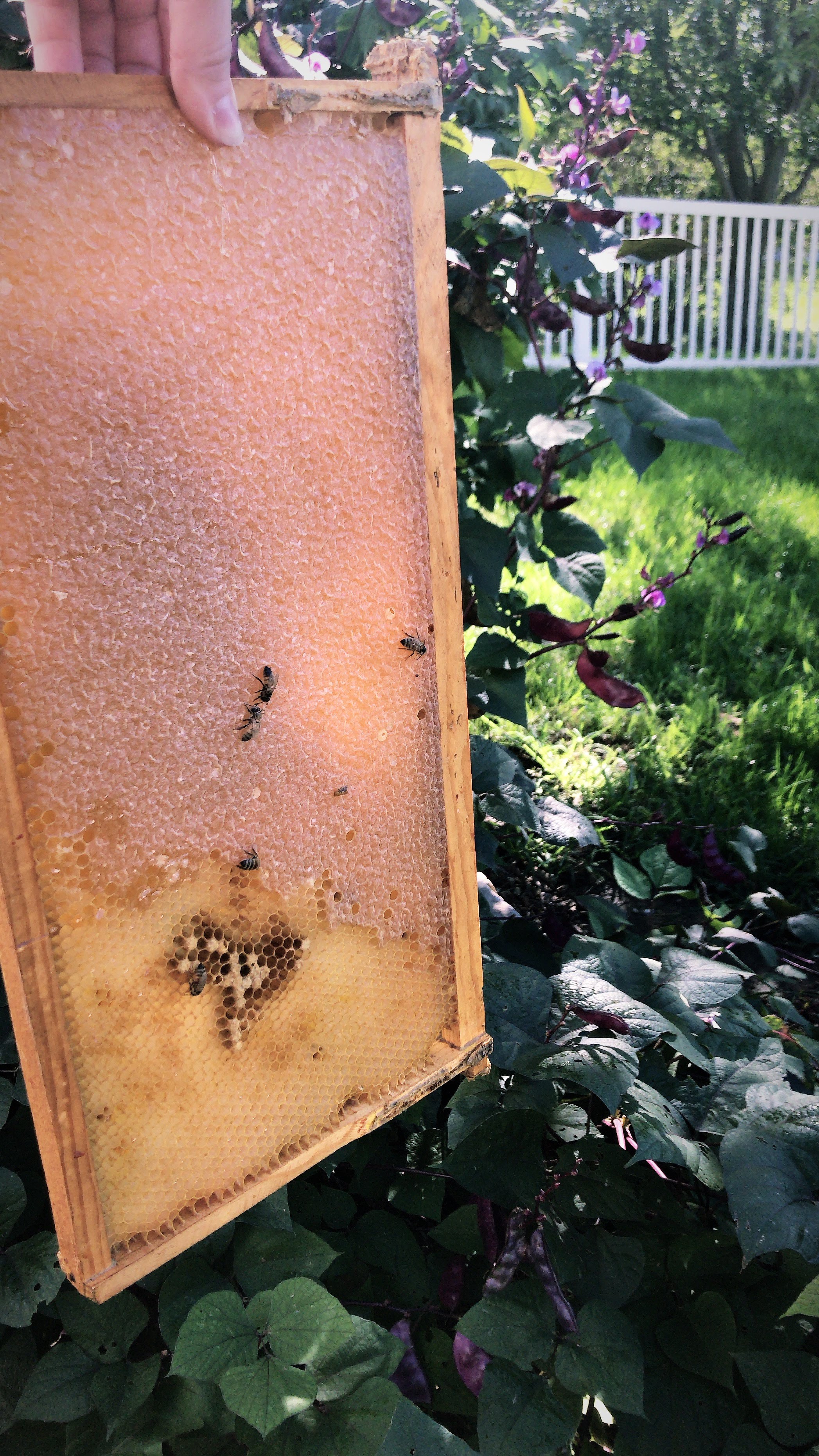
A day before harvest, the honey supers are removed from the hives. Each super has 10-12 “Frames” as you see there that have capped honey. The supers are removed a day early to let any remaining bees return to the hive. 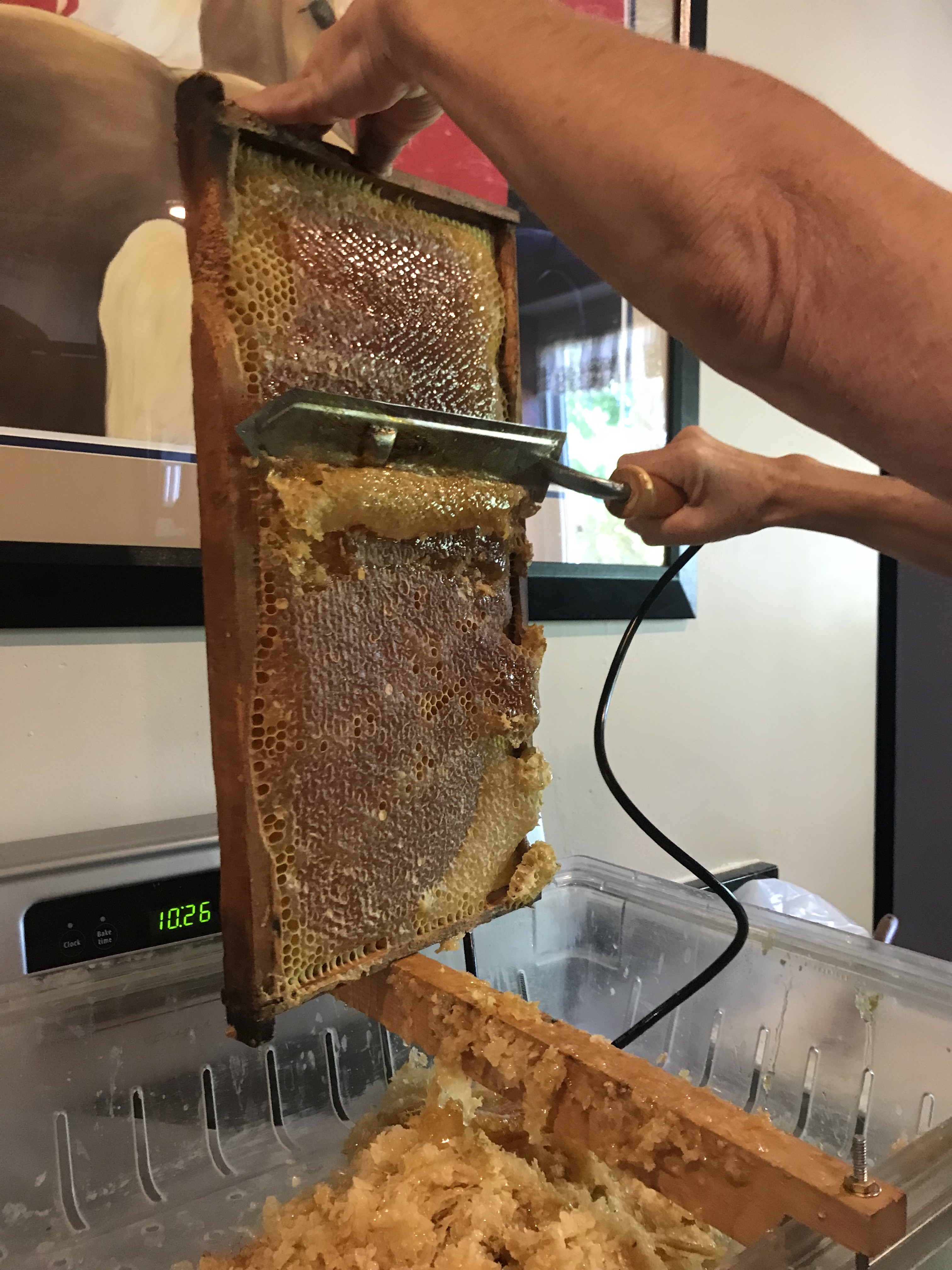
Next, each frame will be processed with a hot knife to remove the cap off of the comb. This is done over a large bin to capture the wax and any honey drip. 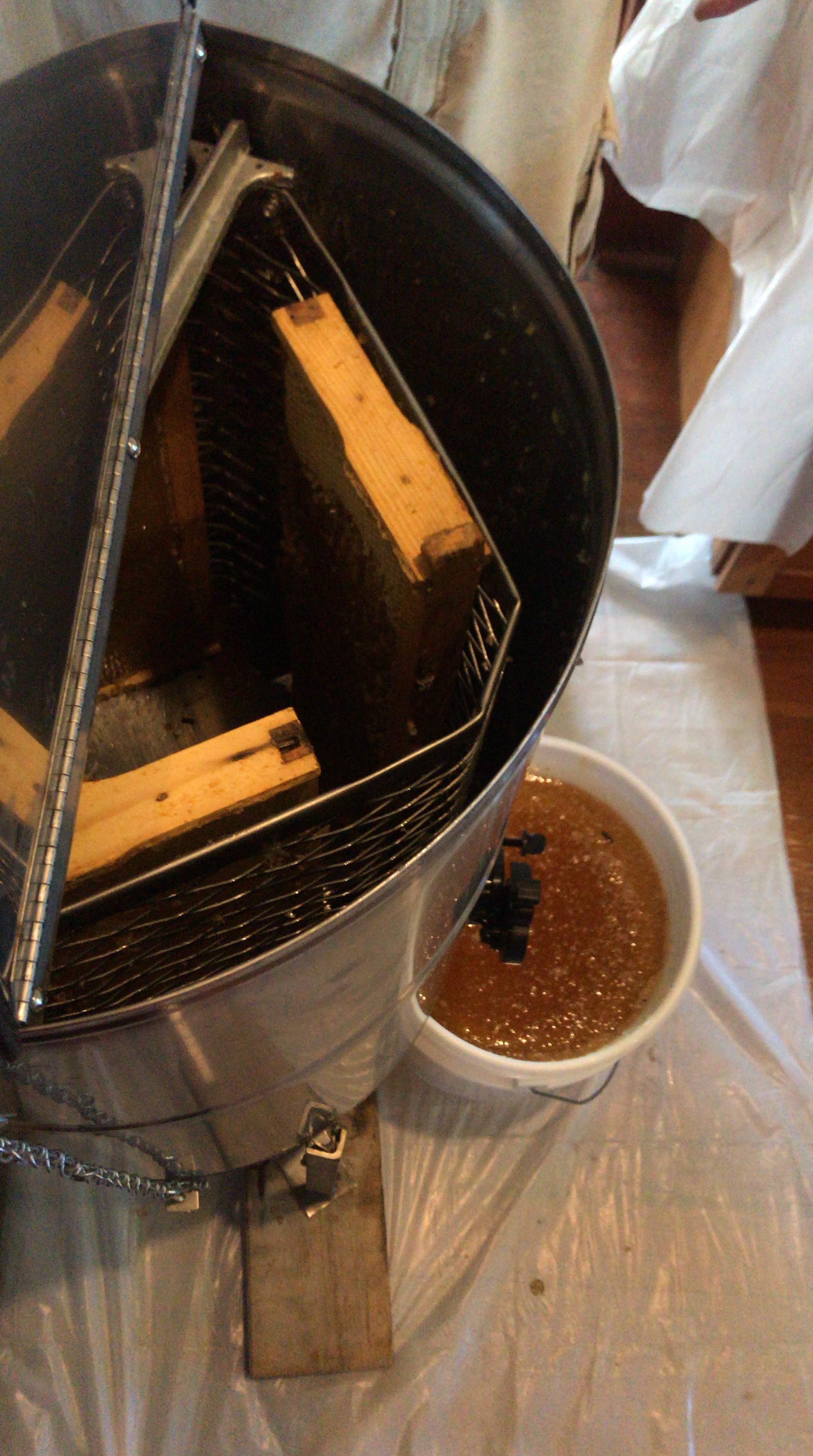
Each frame is then put into a honey extractor. The extractor uses centrifugal force to spin the honey out of each cell of the honey comb. 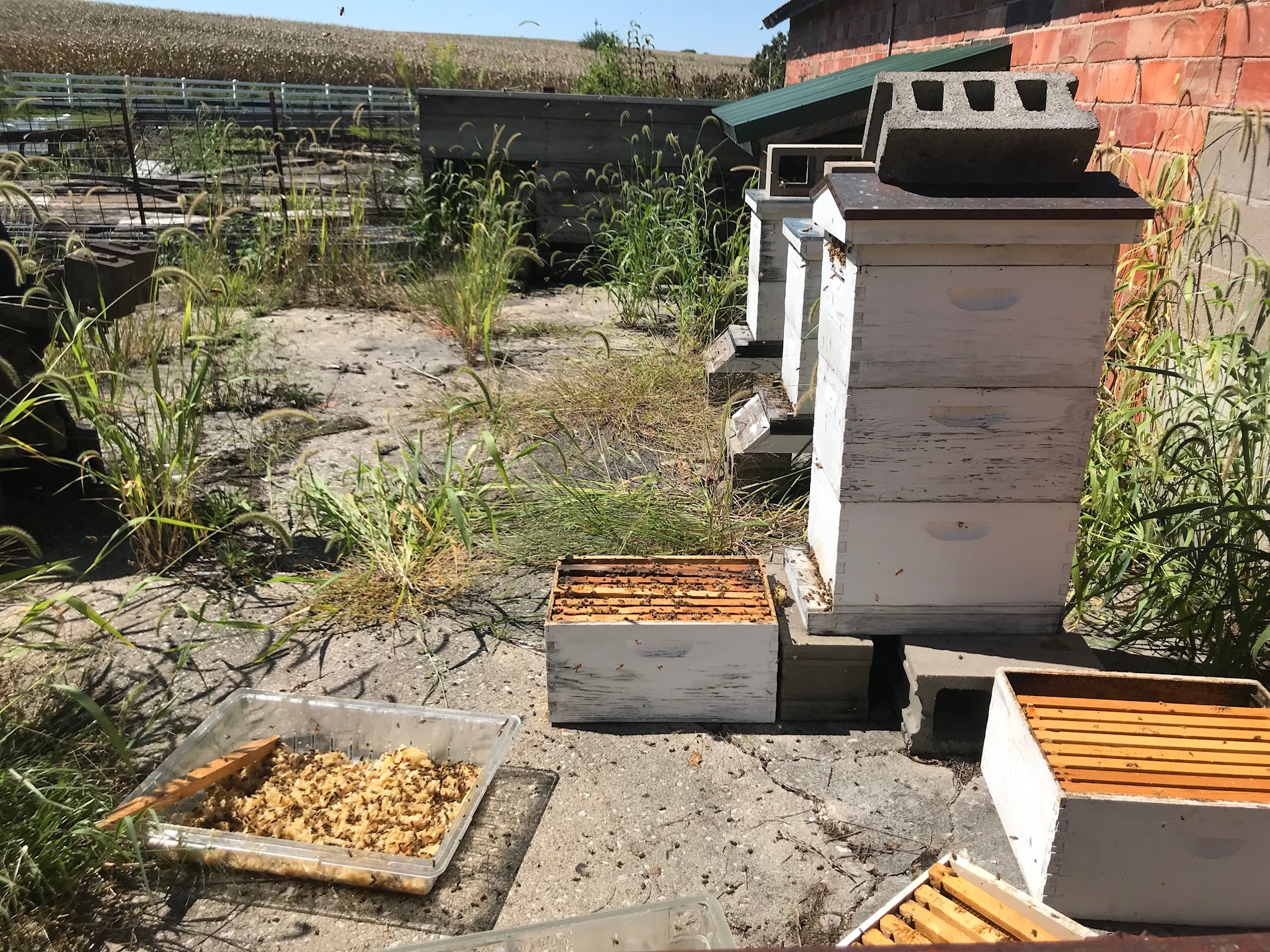
Lastly all of the remaining wax and boxes are set back out by the hives. The bees will reuse all of the wax and honey to start the process all over again. 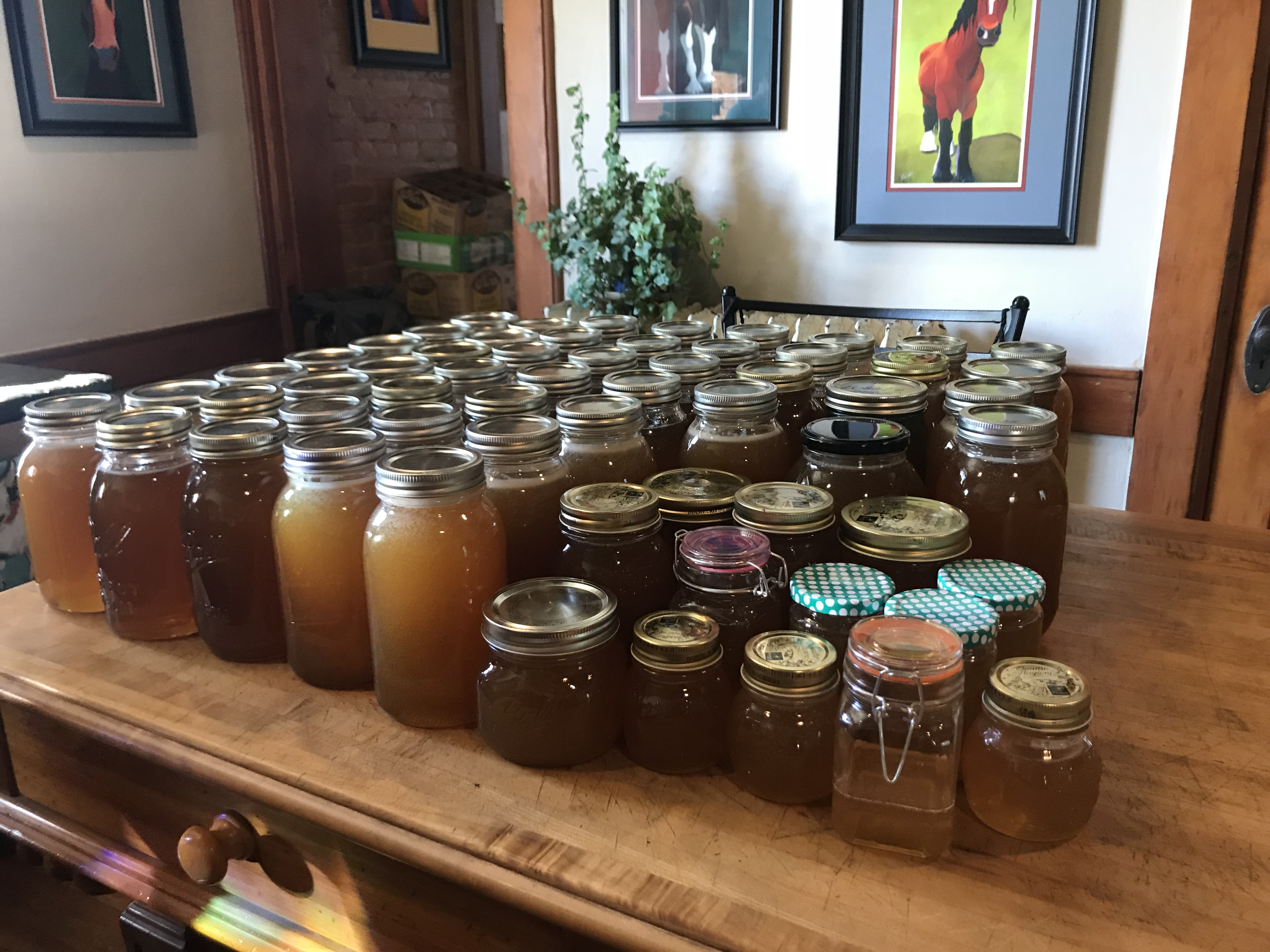
Over 13 Gallons of pure local honey! Note that the color difference is only due to the light passing through. Once the air bubbles settle, all of the honey will be nearly the same color.
Honey is used in our house as a replacement in many recipes for white sugar. Some of my favorite uses for honey include: tea, coffee, granola, oatmeal, breads, and yogurt. Historically, honey was used topically during wars to heal wounds like cuts and burns. Today, another one of my favorite face-masks is a simple mix of honey and cinnamon. Our family has quickly learned how versatile honey can be; from cooking to topical remedies, honey’s benefits can be seen throughout. I look forward to when I can raise my own hives of industrious worker bees.
Stay tuned for some honey packed recipes and uses!

 The Farm Table